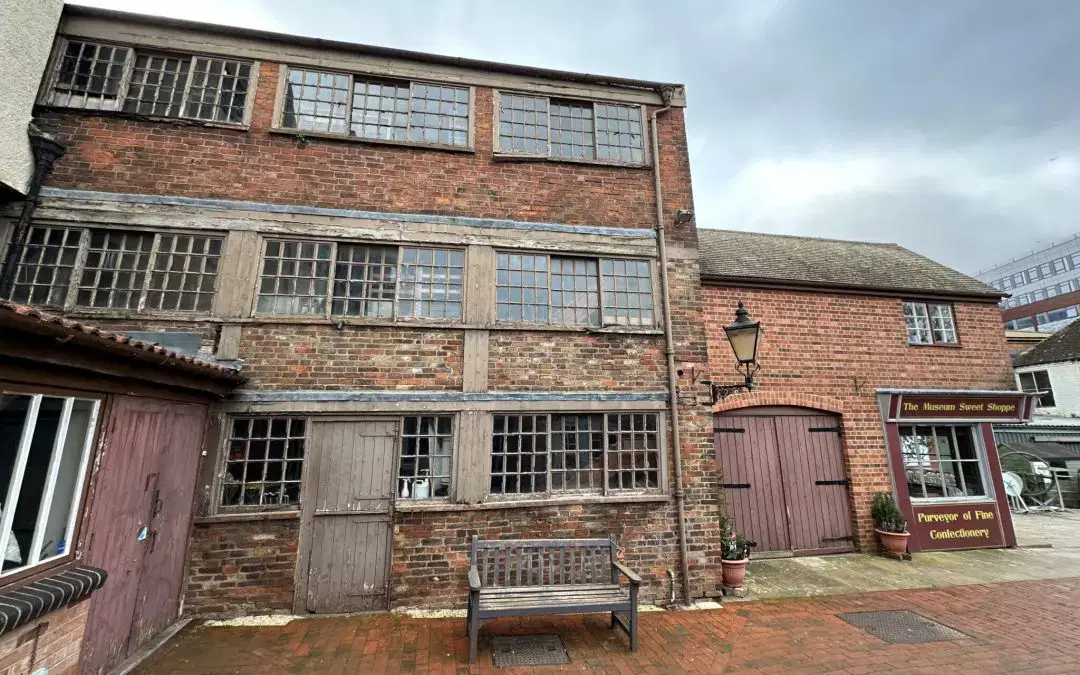
This January, work has begun to restore the Pin Factory Annexe, a building of historic significance at The Folk of Gloucester, 99-103 Westgate Street. This was one of only seven projects chosen in the Southwest to benefit from Historic England’s Heritage at Risk Capital Fund: a special 1-year, £15 million fund to give grants to heritage at risk, helping people to save the historic sites in England that are most important to them.
If you’ve recently visited The Folk of Gloucester (formerly home to Gloucester Folk Museum, now a heritage community centre), you may have noticed scaffolding going up in the courtyard at the back of the site. What you may not know is that behind the hoardings, work is going on to restore a piece of Gloucester’s industrial heritage.
The Folk of Gloucester’s main buildings are three timber-framed merchant’s houses from the 16th-17th Centuries. Behind 99 Westgate Street is the Pin Factory Annexe: a remarkable early 19th Century conversion of a 16th Century timber-framed barn.
By 1743, the top floor of 99 Westgate Street itself was being used as a pin factory, with a range of forges and hearths being utilised somewhat precariously in the upper sections of the former townhouse. At this time, pin making was an enormously important industry in Gloucester. Between 1743 and 1853, 99 Westgate Street played host to the pin manufacturers Cowcher, Kirby, Beard and Tovey (the same Kirby who lent his name to Kirby Grip hair pins). Thousands of pins still lie trapped beneath the floorboards.
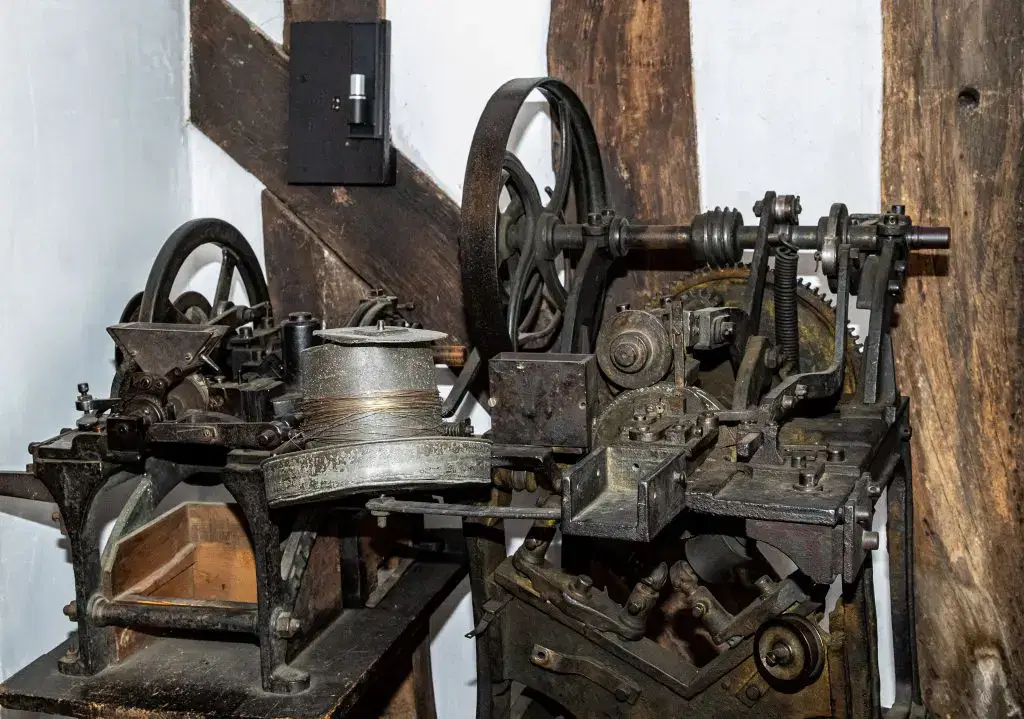
A pin making machine at The Folk of Gloucester © Mike Smith Photography
By the early 19th Century, the process had become increasingly mechanised, and a three-storey annexe had been created within the old barn at the back of the house. As part of this, a set of large Yorkshire sash windows were installed in the south side of the building, providing light and much-needed ventilation to reduce dust and fumes.
Unlike conventional sash windows that slide open vertically, Yorkshire sash windows slide horizontally within the frame. This design removes the need for counterweights, cords or pulleys and is perfect for the thicker walls of farm buildings in North Yorkshire.
It is these distinctive factory windows that urgently need to be restored to maintain the structural integrity of the building. The grant from Historic England is to carefully remove each sash and take these offsite for complete overhaul under controlled conditions, with the historic glass being removed from the rotting wood and re-bedded in era-appropriate frames and sills. Meanwhile, the 1980s stable door will be replaced with a part glazed door to match the historic window pattern.
So, what’s the future of the Pin Factory Annexe once it’s been restored? No longer home to static exhibits, the plan is to go back to its roots as a working building, offering affordable community space for craft workshops and other activities, as well as potentially housing a bar for music and theatre events.
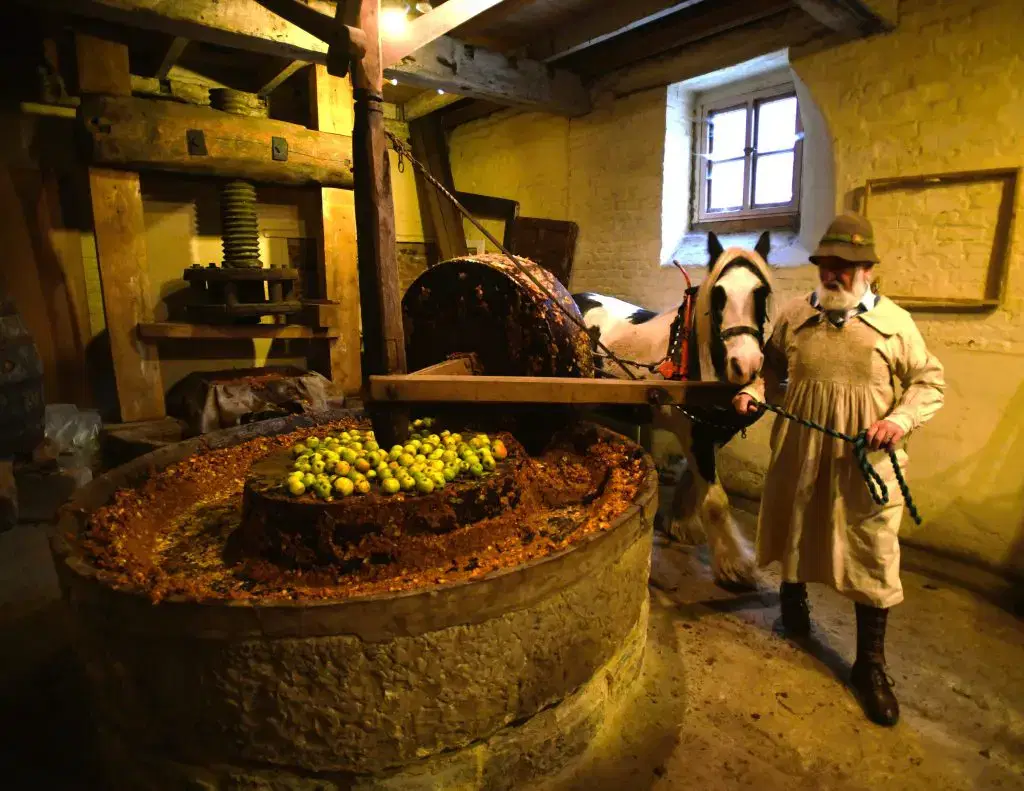
Traditional horse-drawn cider press in operation at The Folk of Gloucester’s Apple Day event © Paul Nicholls
Part of a bigger plan
The Pin Factory Annexe isn’t the only building The Folk of Gloucester is investing in. The Cider Mill, also at the rear of the building, appeared on an estate map of 1780 and houses one of the last surviving horse-drawn cider presses in the West Country.
“Our plan is to turn the ground floor into an interactive ‘Gloucestershire apple varieties and their uses’ educational environment, with upstairs as a community space. We are very grateful to The Swire Trust who have supported the initial stages of this plan. Their grant will fund a feasibility study, which includes architectural drawings and structural engineer fees for assisting with design,” says Louise Williams, Folk of Gloucester CEO.
The Folk of Gloucester’s new branding and logo, co-designed in 2025 with volunteers and community members, reflects the site’s changing role, with the strapline “Heritage, Community, Arts” going beyond its former museum status.
“As we reflect on the last twelve months of operating as a new team, delivering new events and activities, we have become a thriving space for art, theatre, music and storytelling. Our record visitor numbers, and the comments left by them, tell us all we need to know about how loved these buildings are by the public,” says Louise Williams.
If you are a current Folk fan, or perhaps visited as a child and haven’t been since it was a museum, The Folk of Gloucester website has all the information you’ll need to tempt you to come along. The historic buildings are free to look around and host a wide variety of events and activities. So next time you’re in town, why not venture down to the bottom of Westgate Street to explore Gloucester’s best-kept secret…
Find out more on The Folk of Gloucester Website.